

What technology can teach us about how we handle life's challenges
Failing fast isn't an optimistic philosophy or a motivational poster slogan. It's a well-proven best practice that has helped people find the right path before wasting time, money and energy.
Start small, but start
The concept of the MVP (Minimum Viable Product) was born in the world of tech startups. The premise is simple: don't wait for the perfect product before you ship it. Launch something functional as soon as you can, even if it's incomplete, so you can test whether you're on the right track. The sooner you get real feedback from the market (or from life), the sooner you can adapt, improve or change direction.
In short: test, learn, correct.
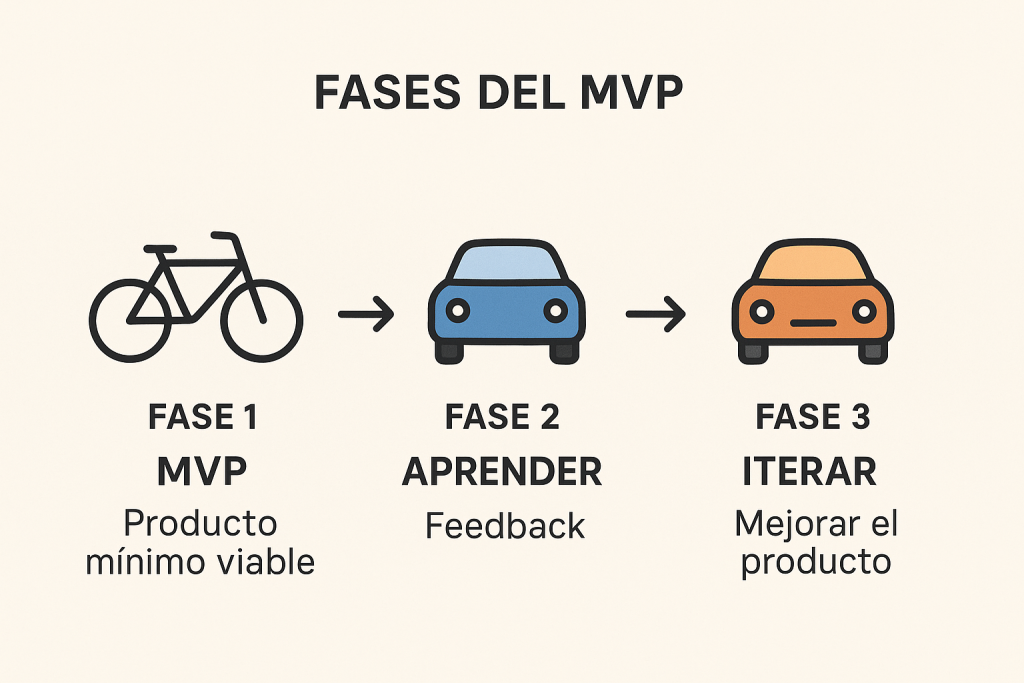
But what's interesting is that this principle goes far beyond software and startups. You can apply it to anything: a business, a personal project, a new product line, even a career decision. Test on a small scale. Observe. Learn. Adapt. That's what moving forward intelligently looks like.
The risk of building castles in the air
What's the point of spending months or years building something in secret, down to the last detail, only to find out at launch that nobody wants it? That risk is huge. It's why so many products die before they're ever really born.
Launching an MVP is a way to protect your energy, your resources and your motivation. It's not about being impatient. It's about being smart and agile.
Real-world cases
Instagram: from a check-in app to an image empire
A well-known case in the tech world is Instagram. What we now know as one of the most influential social networks in the world started out as Burbn, an app for checking in, sharing plans and posting photos. But when the founders looked at how their first users were actually using it, they discovered that the only thing people really cared about was sharing photos with filters.
Instead of doubling down on their original idea, they pivoted. They cut everything else and bet on that one thing. Instagram was born within a few weeks. And in less than two years, Facebook bought it for $1 billion.
Captio: a pivot close to home
One case I saw up close was Captio, a company that started out as a tool to help accounting firms manage their clients' expenses more efficiently. But that model wasn't scalable. The firms weren't ready for that digital shift, and adoption was slow.
Instead of pushing on, they pivoted to a direct-to-business (B2B) model, offering a SaaS solution that let companies manage their employees' expenses and travel in-house. At a time when digitizing receipts wasn't very advanced, Captio went all in on OCR and automation.
That change of course changed everything: the value proposition was clear, it solved a real problem, and it did so at the right moment. Today Captio is part of Emburse and operates across Europe, helping thousands of companies manage expenses efficiently.
It's not just tech, it's a way of living
Although these examples come from the tech world, the message is universal: there's no progress without action, and no learning without mistakes.
How often do we freeze in life, waiting for the perfect moment, the perfect plan, the perfect product? Meanwhile the world moves on, opportunities pass, and we're still standing at the starting line.
But when we dare to ship something—even if it's not quite ready—when we gather feedback, listen with humility and change course if we have to, that's when we truly grow.
Close the spreadsheet, look up: get moving, even if it's something small
Planning matters. But validating matters even more. If you have an idea, a project, a change in mind: launch it small. Test. Observe. Adjust. You don't need to have all the answers before you act.
Sometimes a small experiment is enough: try it, listen, learn… and then, yes, build something big.