
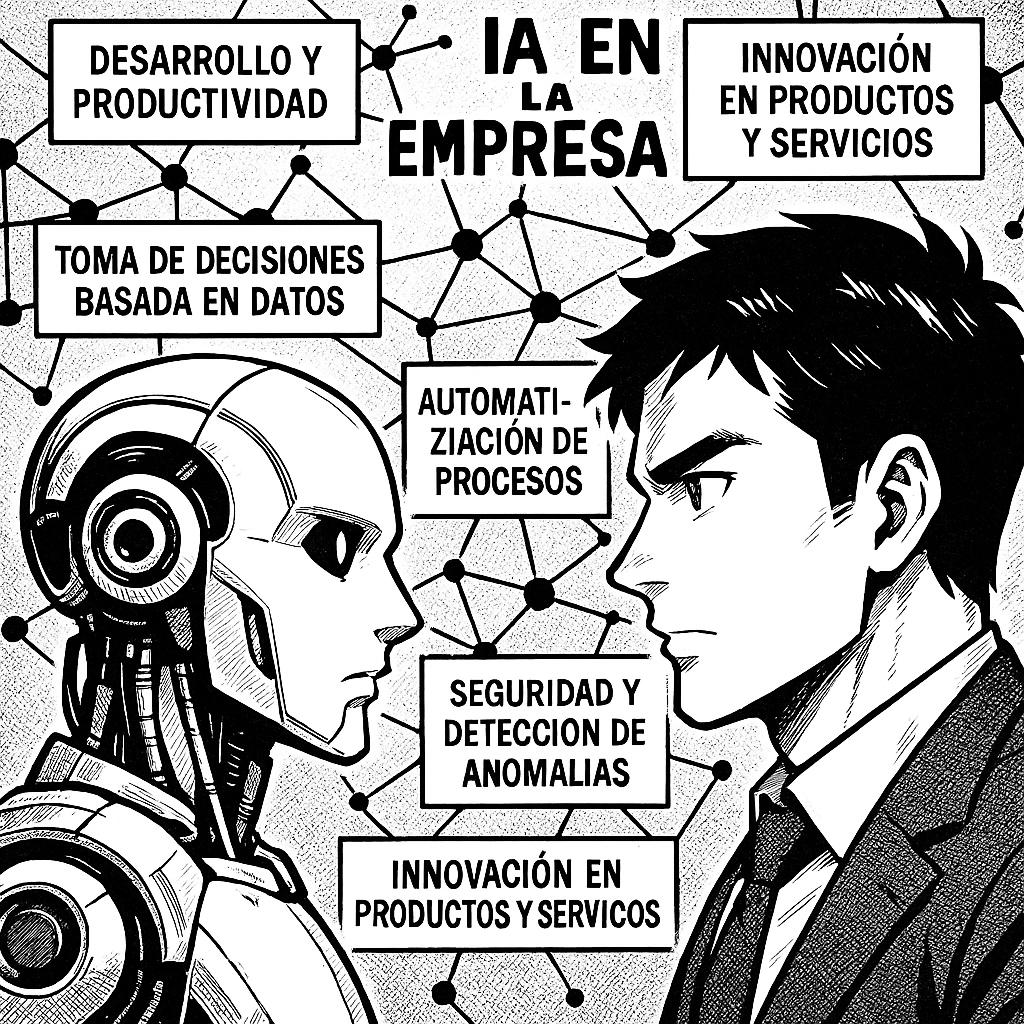
Will artificial intelligence replace humans, or is it just one more tool?
Lately it feels like there are only two camps. I see a lot of comments and opinions staking out extreme positions: either everything is AI, or only experienced humans should have a say. But like everything in life, positions that far apart collide with day-to-day reality, and those who don't adapt to this new era of technology will probably get left behind.
Somewhere along the way, the idea took hold that using AI to create content, develop ideas or improve processes is cheating. Nothing could be further from the truth. Using AI doesn't make you an impostor; it makes you someone who knows how to get the most out of the tools available. What matters is how you use it to amplify your skills and streamline your work.
AI hasn't come to take our jobs. It's one more tool in the toolbox. In the right hands and with good practices, it can make a company more productive and more profitable. That doesn't mean AI should make the final decisions; people will always be needed to guide these processes.
AI isn't a magic fix, but applied well, it can be a real differentiator in how a company evolves. Implementing it isn't just a technical challenge; it's a process of organizational transformation. It's not enough to adopt the technology: you have to integrate it strategically to create real, lasting value. The question isn't whether to use AI, but how to use it effectively.
Why AI matters for companies today
In a world where efficiency and speed decide who leads and who disappears, AI has become a strategic ally. It's not only about cutting costs or automating repetitive tasks; it's about amplifying what teams can do and opening up new business opportunities. Companies that don't adopt AI risk falling behind on competitiveness.
From a product perspective, AI speeds up innovation, helps you understand users better and lets you offer smarter solutions. On the technical side, implementing it raises challenges in architecture, integration and data governance. AI isn't just a technology; it's an engine of change that transforms both how we build products and how we operate. The question isn't whether to use AI, but how to integrate it strategically to create real value.
Where AI fits in a company
Below are the main areas where AI can add value in a company, with concrete examples of how it's applied:
| Area | Application examples |
|---|---|
| Development and productivity | GitHub Copilot for coding assistance, automatic test generation |
| Data-driven decision-making | Predictive models for sales, sentiment analysis on social media |
| Process automation | Customer support chatbots, RPA (Robotic Process Automation) for repetitive tasks |
| Security and anomaly detection | Fraud detection in transactions, network traffic monitoring for cybersecurity |
| Product and service innovation | Personalized recommendations in e-commerce, virtual assistants in software |
Rolling out AI in your company: challenges and strategies
Despite the benefits, implementing AI is not a trivial process. There are technical barriers, resistance to change and the need for specialized talent. From my experience, a few key approaches make for a successful integration:
- Start with specific use cases: You don't have to adopt AI across the whole company at once. Identifying processes where AI delivers value right away helps you build momentum.
- Training and culture change: Teams need to understand that AI complements their work rather than replacing it.
- Choosing the right tools: There are plenty of options on the market, from off-the-shelf solutions to custom models.
- Measuring impact: Define KPIs early so you can tell whether AI is really adding value or whether you need to adjust your strategy.
AI isn't just a technology; it's an engine of change that transforms both how we build products and how we operate. The question isn't whether to use AI, but how to integrate it strategically to create real value.
Is your company ready to take that step?